




A prototype passes validation tests with excellent results, but after moving to serial production the bonded joints start to fail. Does this mean the epoxy adhesive is defective? In many cases, the real cause lies not in the adhesive itself, but in changes in surface preparation, mixing, bond-line geometry or environmental conditions.
This guide shows process engineers and Maintenance & Reliability teams where to look for the source of problems with structural 2K epoxy bonding and how to diagnose the process before replacing the adhesive.
1. The “defective adhesive” myth: adhesion vs cohesion
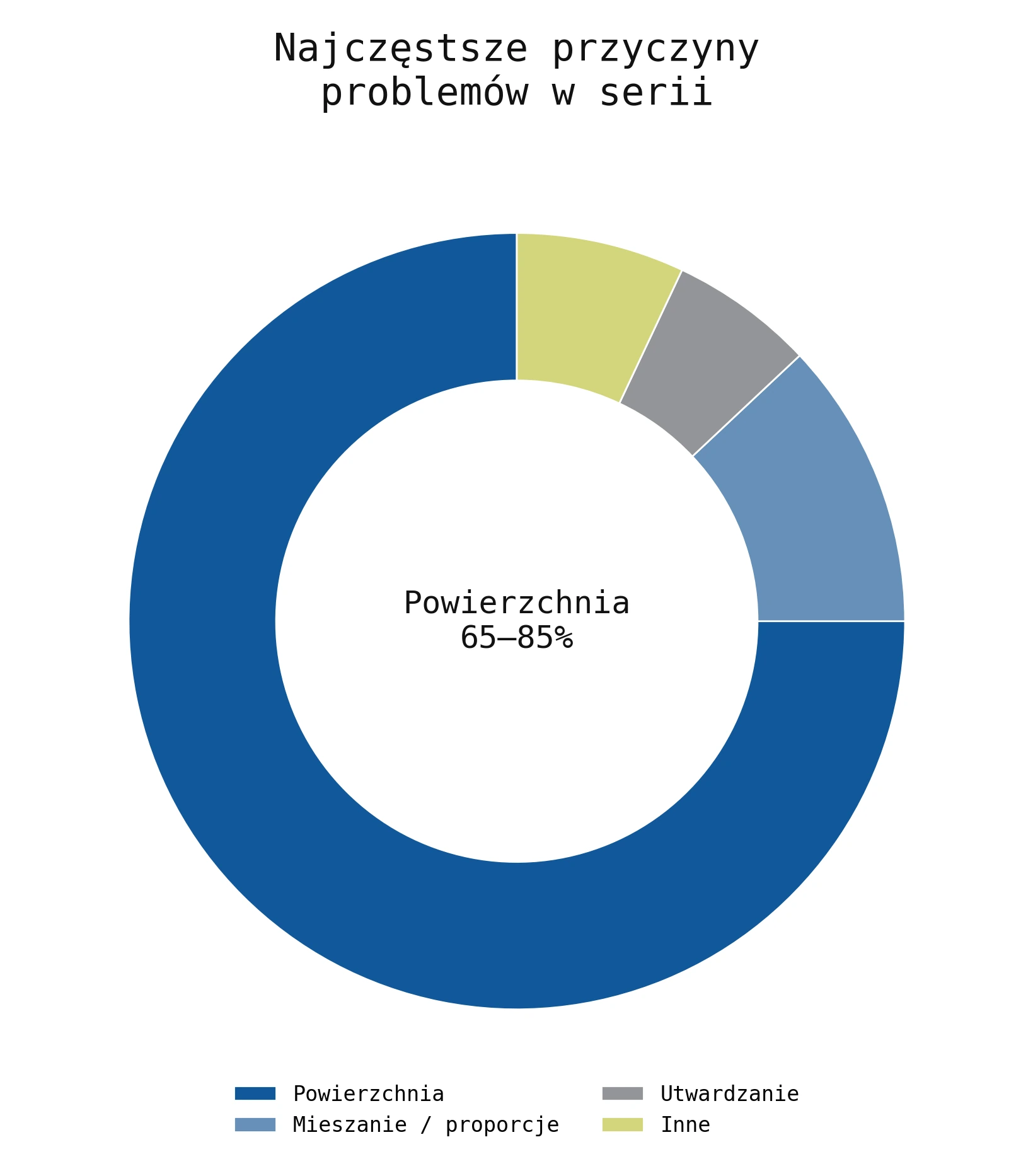
When a bonded joint fails, the natural reaction is to suspect the adhesive batch. Before replacing the material with a supposedly “stronger” adhesive – which may require another validation process – first determine how the joint failed.
- Cohesive failure: the fracture occurs within the adhesive layer and adhesive remains on both bonded surfaces. This generally indicates that adhesion to the substrates was achieved, while the problem may be related to joint loading, bond-line geometry or curing conditions.
- Adhesive failure: the adhesive separates cleanly from one of the substrates. This is an important warning signal pointing towards surface preparation, contamination or insufficient wettability.
2. Process risk map: what changes after moving from the laboratory to production?
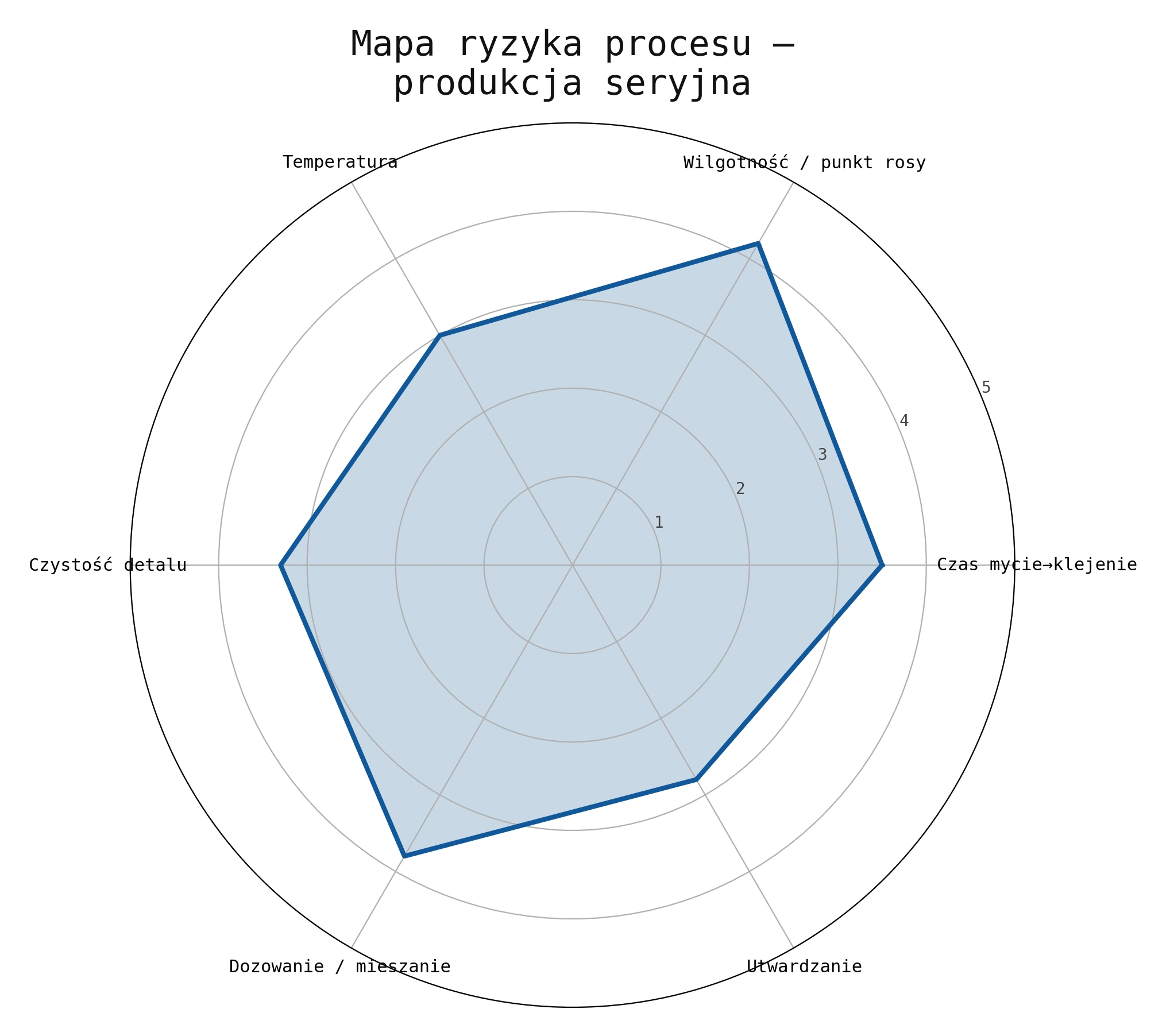
Serial production introduces variables that are usually much easier to control during laboratory validation: changes between substrate batches, contamination during transport and handling, different operators, varying humidity and temperature or longer waiting times between individual process stages.
Two parameters are particularly important when troubleshooting epoxy bonding:
- Time between cleaning and bonding. A prepared surface can change over time through contamination, oxidation, adsorption of moisture or contact with the environment. The acceptable time between preparation and adhesive application should therefore form part of the production procedure.
- Dew point and condensation. Components brought from a cold warehouse into a warmer production area may remain below the dew point. Moisture can then condense on the substrate even when the surface does not appear visibly wet.
3. The ratio trap: why “more hardener” does not make a 2K epoxy better
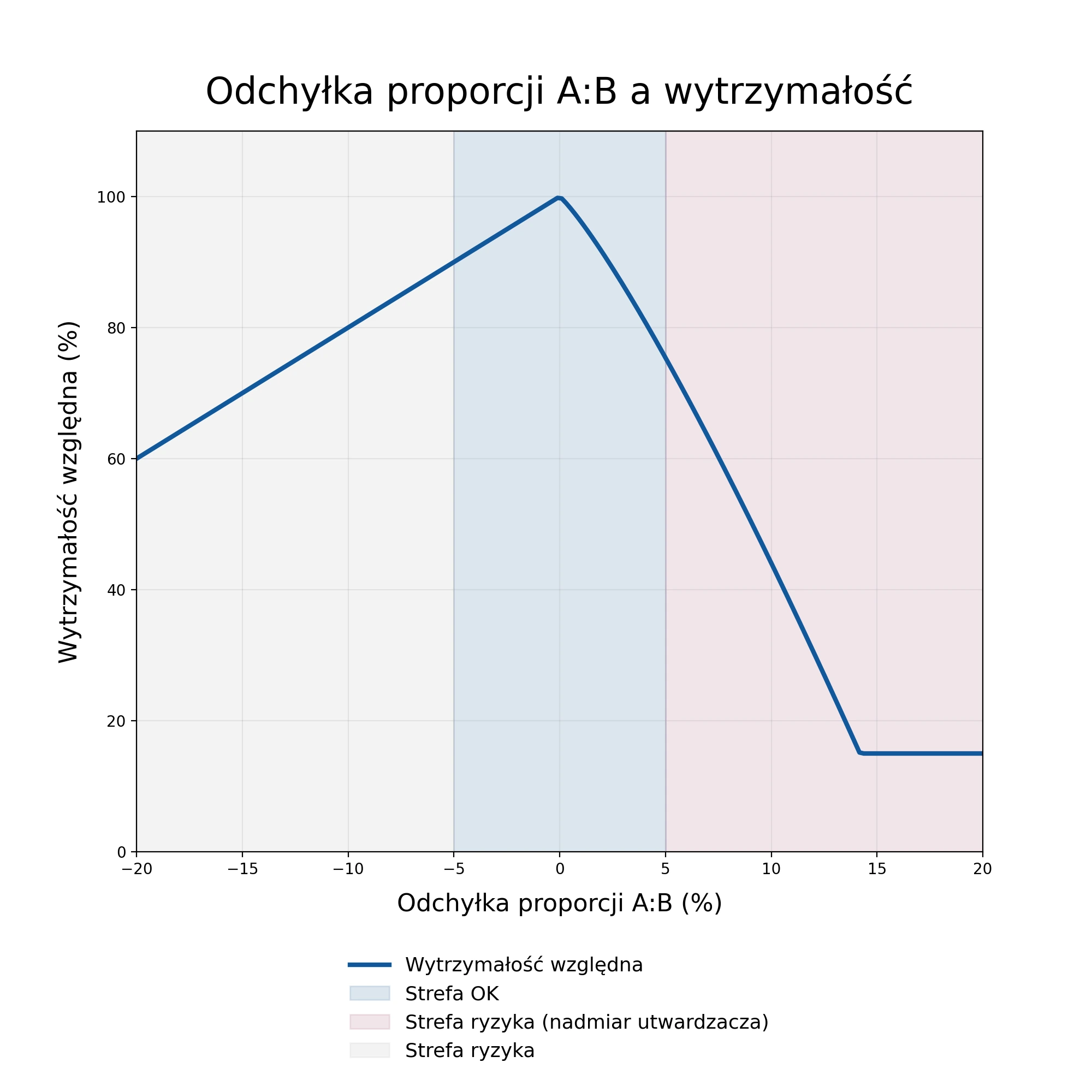
A common production-floor misconception is that adding more component B will make a two-component adhesive cure faster. With 2K epoxy systems, the mixing ratio is part of the product design and must follow the manufacturer's specification.
The resin and hardener react according to the chemistry of the system. Deviating from the specified ratio can leave an excess of one component in the cured adhesive layer.
- Too much or too little hardener can prevent the system from reaching its intended properties.
- Incorrect mixing can create local areas with a different composition or incomplete cure.
- Incorrect dispensing can produce apparently random variations between successive bonded components.
For dispensing equipment, the actual ratio and output should be checked according to the adhesive manufacturer's and equipment supplier's procedure. With two-component cartridges, the correct static mixer is also essential for achieving a homogeneous mixture.
4. Geometry: bond-line thickness matters
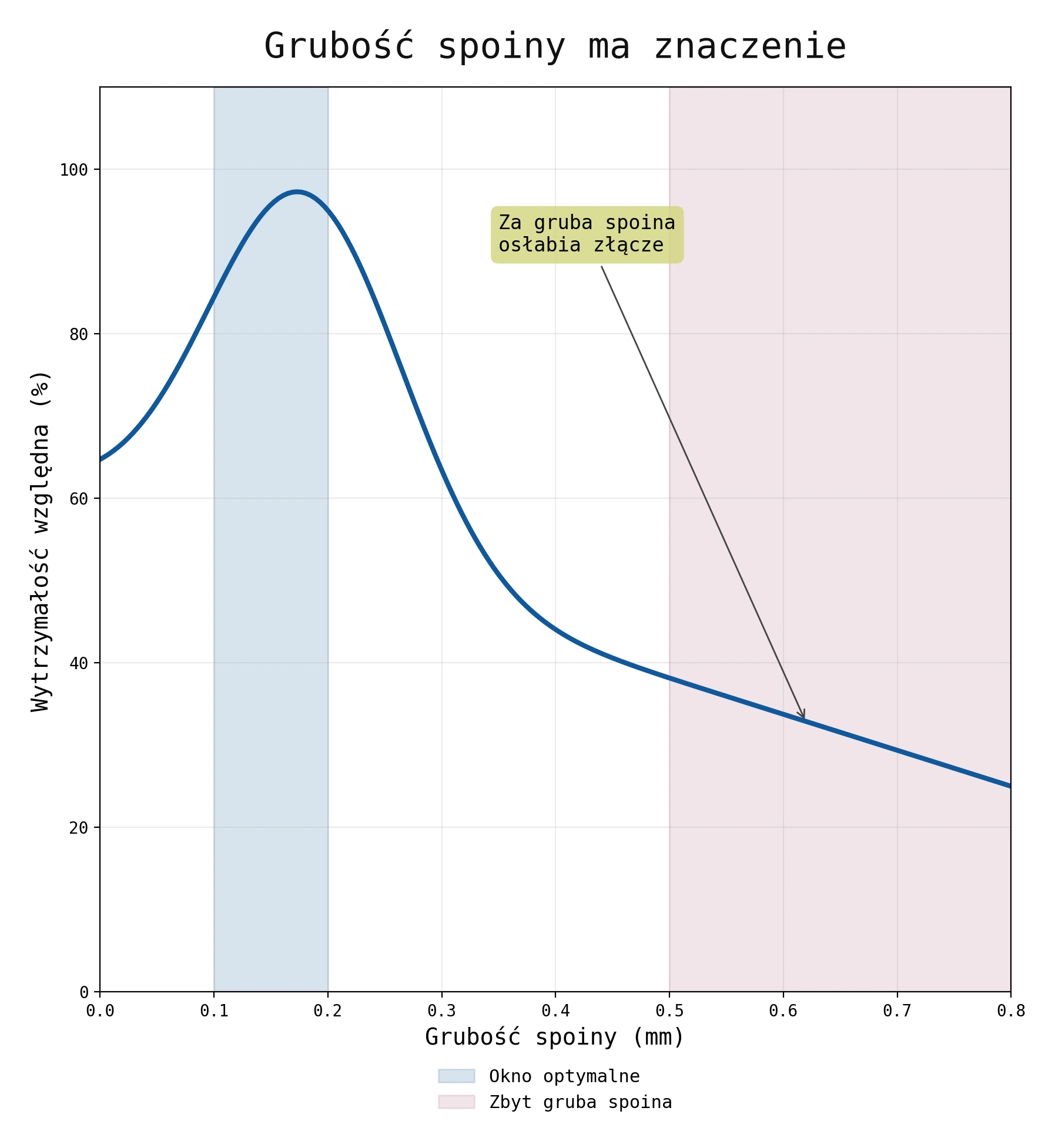
An epoxy adhesive should not automatically be treated like a weld where the goal is simply to leave as little material as possible. The required bond-line thickness depends on the particular adhesive, substrates, joint geometry and application.
- Bond line too thin: excessive clamping pressure can squeeze adhesive out of the joint and create a starved bond.
- Bond line too thick: process variation, air entrapment and dimensional changes can become more difficult to control.
In serial production, the important objective is repeatability. The joint gap should be defined by the design and process rather than by operator judgement alone.
Depending on the application, this can be achieved by mechanical stops in the fixture, defined component geometry or appropriate spacers. If an adhesive contains integrated spacer technology, its use and target bond-line thickness should follow the product TDS.
5. How to diagnose the process without guessing: the four-sample method
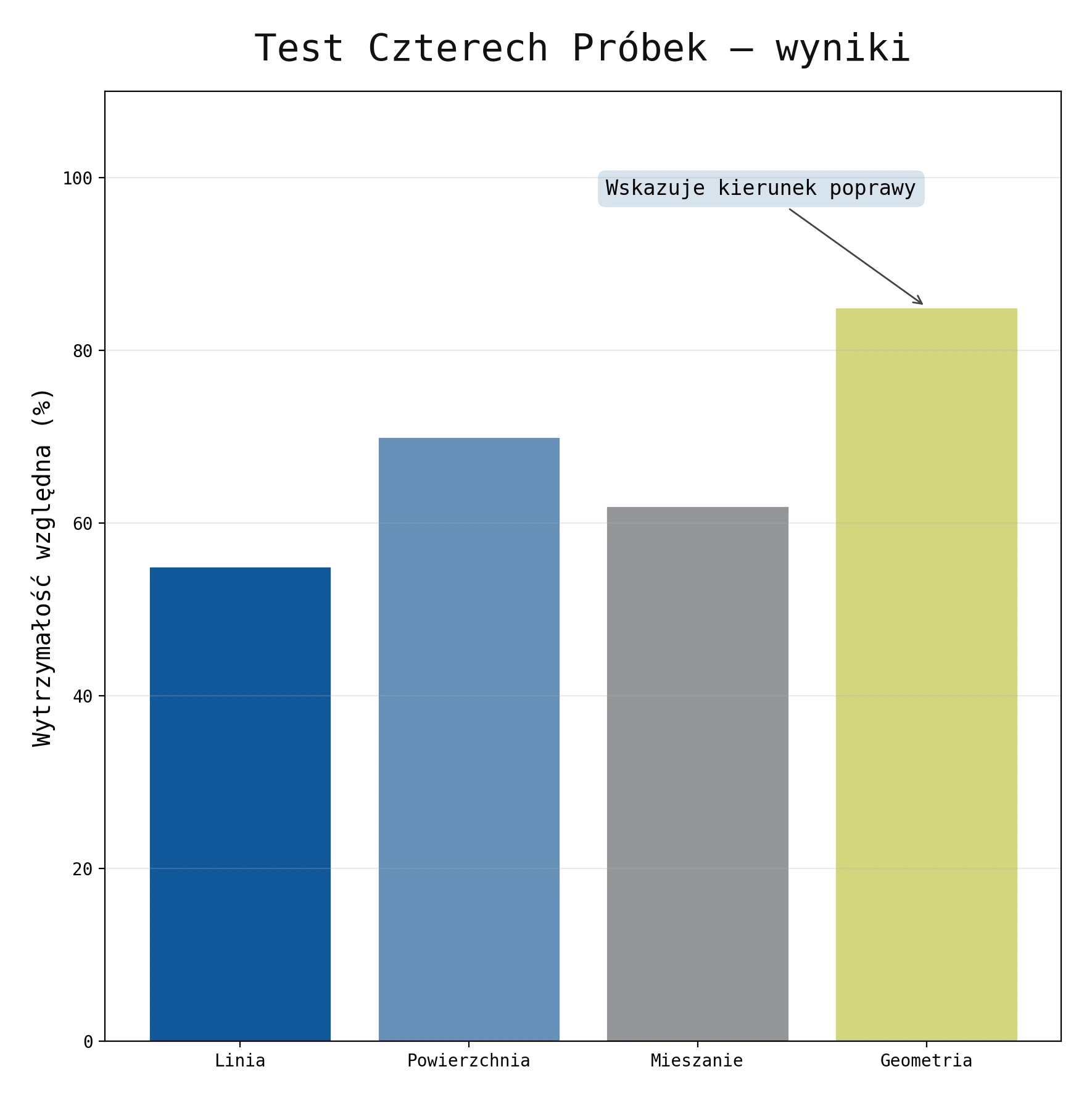
Instead of stopping production and immediately introducing another adhesive, it is useful to isolate individual process variables. One practical approach is to prepare four comparison sets using the same adhesive and substrate batch.
- Line – reference. Current production process, current operators, current cleaning and current dispensing method. This creates the baseline.
- Surface. Use the same adhesive but prepare the substrate under tightly controlled conditions using the defined mechanical preparation and cleaner or degreaser.
- Mixing. Use the production-prepared substrate but verify the adhesive proportion and mixing independently to isolate possible dispensing or static-mixer issues.
- Geometry. Use a controlled and repeatable bond-line thickness to check whether joint geometry is the dominant variable.
How should the results be interpreted?
- If the surface-controlled samples improve significantly, review cleaning, surface preparation, contamination and the time between preparation and bonding.
- If the mixing-controlled samples improve, inspect the dispenser, cartridge, ratio, mixer and dispensing procedure.
- If the geometry-controlled samples improve, review fixtures, clamping pressure and bond-line thickness.
Summary for Process Engineering and Maintenance
A stable bonding process is based on controlled chemistry and controlled process conditions. When a 2K epoxy joint works during prototype validation but begins to fail in serial production, start by comparing the process rather than immediately replacing the adhesive.
- Audit surface preparation. Check the cleaning method, contamination risks and the time between surface preparation and bonding.
- Control dispensing and mixing. Verify the ratio, output, static mixer and start-up procedure for the dispensing system.
- Control joint geometry. Determine whether tooling ensures a repeatable bond-line thickness and pressure.
- Control environmental conditions. Check temperature, humidity and condensation risk whenever these can affect the process.
A good adhesive is only one part of a reliable bonded joint. The second part is a repeatable production process.
Products supporting a repeatable bonding process
Depending on the application, the process may require not only the adhesive itself but also correctly selected surface preparation products, dispensing accessories and materials matched to the required joint geometry.
...
FAQ – 2K epoxy bonding in serial production
Why does an epoxy joint work during prototype testing but fail in serial production?
The adhesive may be the same, while the process is no longer identical. Typical differences include surface preparation, contamination, waiting time before bonding, environmental conditions, dispensing accuracy and bond-line thickness.
Does adhesive failure mean that the epoxy itself is too weak?
Not necessarily. Clean separation from one substrate often indicates insufficient adhesion to that surface. Surface preparation, contamination, wettability and process conditions should therefore be checked before changing the adhesive.
Can adding more hardener make a 2K epoxy cure faster?
No. The resin-to-hardener ratio specified by the manufacturer is part of the adhesive system. Deliberately changing it can result in incomplete reaction and properties different from those specified for the product.
How can the mixing quality of a cartridge adhesive be checked?
Check that the correct static mixer is installed, inspect the dispensing procedure and verify that both components are flowing correctly. Detailed acceptance criteria should follow the adhesive and dispensing-equipment documentation.
Why is bond-line thickness important?
Because changes in gap thickness alter adhesive quantity, stress distribution and the way the joint is loaded. In serial production, the important objective is to maintain a defined and repeatable geometry.
Should the adhesive be changed immediately when production complaints appear?
Usually it is better to identify the failure mode and isolate process variables first. Changing the adhesive without understanding the root cause may leave the actual production problem unchanged and can create the need for additional validation.
Recurring problems with bonded-joint delamination?
Instead of replacing products by trial and error, analyse the complete process: substrate preparation, adhesive selection, dispensing, mixing and joint geometry. Melkib can support the selection of adhesive technology and the development of a repeatable application process.