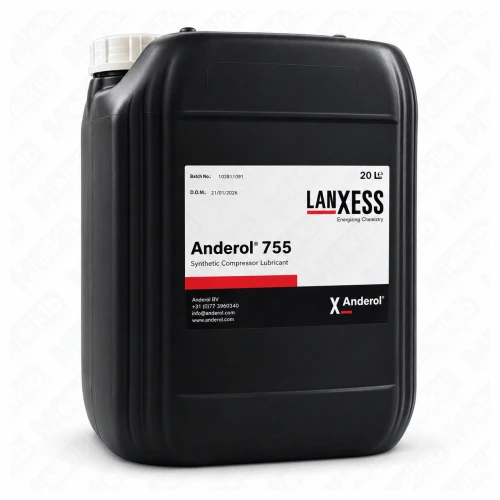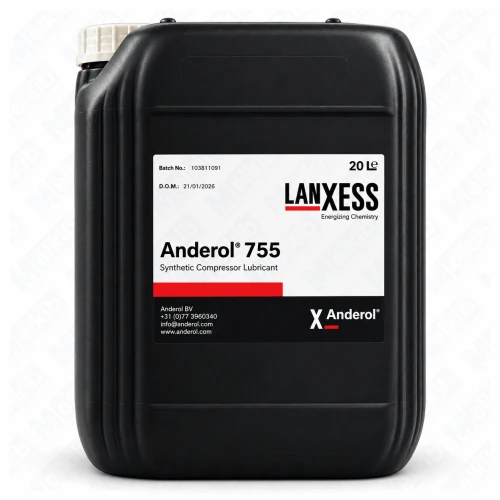



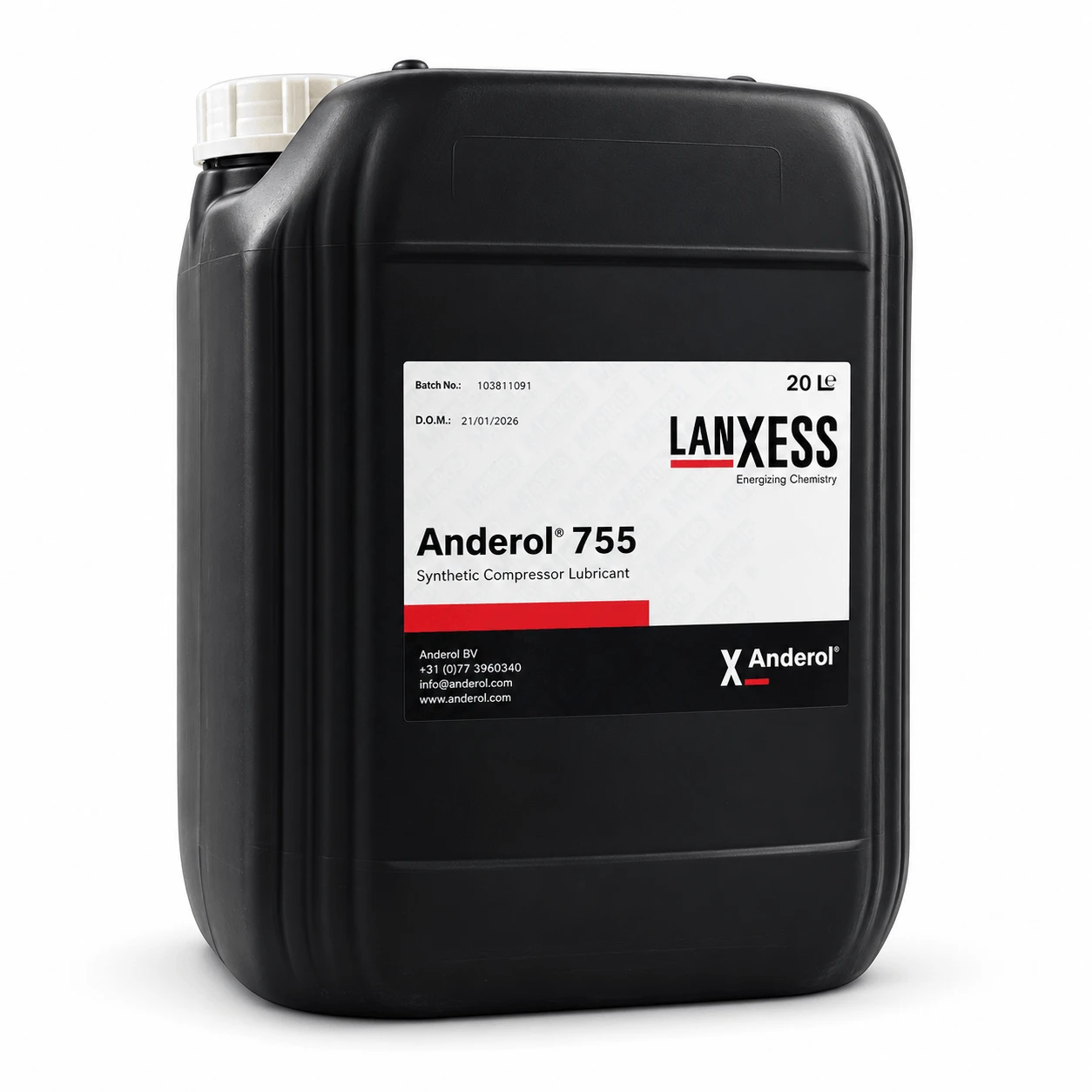
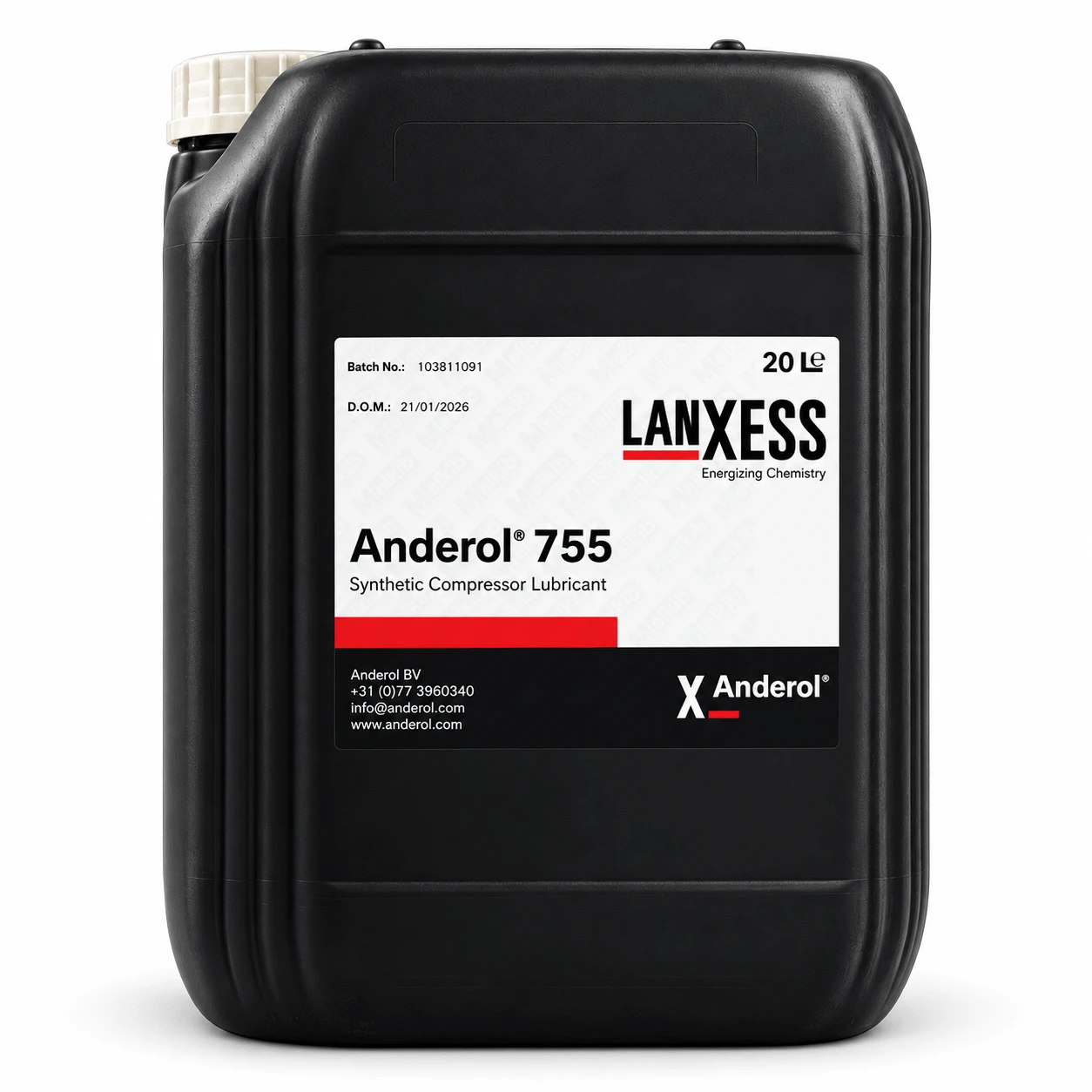
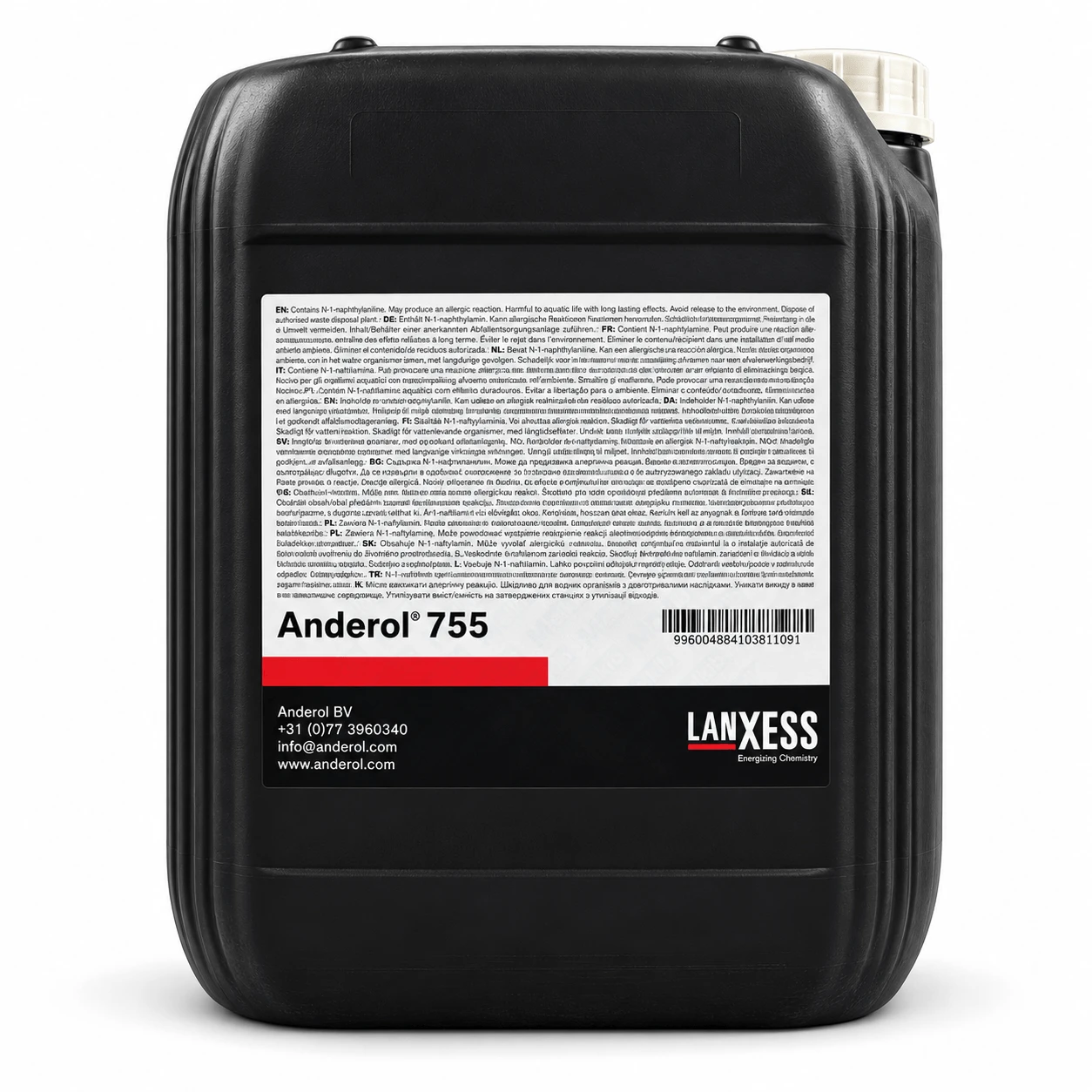
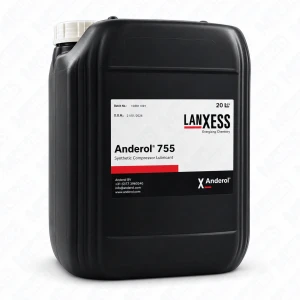
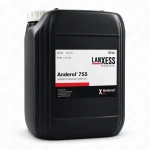
ANDEROL 755 20 L synthetic triester compressor oil ISO VG 150

Product code: MB-0328
Leave feedback on the product
Related products
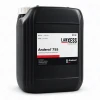




Secure purchase guarantee



Opis produktu
ANDEROL 755 20 L – synthetic triester-based compressor oil ISO VG 150
ANDEROL 755 is a synthetic ISO VG 150 compressor lubricant based on triesters, developed for long-term lubrication of air and process gas compressors. It is primarily intended for reciprocating compressors, including splash-lubricated systems, as well as suitably selected vane compressors and vacuum pumps.
In demanding industrial installations, controlling deposit formation, separating water condensate and ensuring compatibility with seals and construction materials are important considerations. The ANDEROL 755 formulation has been developed to address these requirements.
According to the manufacturer, the product meets or exceeds the requirements of DIN 51506 VDL and ISO 6743-3 L-DVC. It is supplied in an original 20-litre container.
Applications of ANDEROL 755
ANDEROL 755 is intended for equipment requiring a synthetic ISO VG 150 compressor oil with suitable lubricating properties and material compatibility.
- Reciprocating compressors – cylinder and crankcase lubrication in industrial compression systems.
- Splash-lubricated compressors – applications compatible with the equipment's design requirements.
- Vane compressors – lubrication of suitably selected compressor systems.
- Vacuum pumps – applications where the equipment manufacturer permits triester-based ISO VG 150 oil.
- Process gas compressors – industrial installations requiring individual confirmation of lubricant compatibility with the process medium.
Process gases listed by the manufacturer
ANDEROL 755 documentation identifies applications involving air, nitrogen, helium, hydrogen, methane, natural gas, propane, carbon monoxide, dry carbon dioxide, butadiene and ethylene.
Important: the inclusion of a gas in the manufacturer's documentation does not constitute unconditional approval for every installation. Lubricant selection must consider gas properties, temperature, pressure, compressor design and the equipment manufacturer's requirements.
Key benefits of synthetic ANDEROL 755 compressor oil
Synthetic triester base oil
ANDEROL 755 uses synthetic triesters to provide lubricating properties suited to specialised compressor applications. The base oil chemistry must also be considered when assessing compatibility with seals, coatings and plastics.
Reduced deposit formation
The manufacturer highlights the formulation's ability to help limit carbon deposits, sludge and lacquer formation. This may support cleaner system operation and reduce maintenance problems associated with contaminated compressor components.
Water condensate separation
ANDEROL 755 is designed to separate water rapidly. This property is important in systems where condensation occurs during operation.
Potential for extended oil drain intervals
According to the manufacturer, ANDEROL 755 may help reduce oil consumption and maintenance frequency compared with conventional lubricants. Actual oil change intervals depend on equipment design, operating conditions and oil condition monitoring results.
Formulation without metal-based additives
The manufacturer states that the lubricant does not contain metal-based additives that could interfere with certain catalytic processes. This may be an important consideration when selecting lubricants for specialised industrial installations.
When should you choose ANDEROL 755?
ANDEROL 755 should be considered when the compressor manufacturer's documentation specifies a synthetic ISO VG 150 oil and its chemistry and performance characteristics are compatible with the equipment and compressed gas.
Before purchasing, verify the required viscosity grade, base oil type, material compatibility and maintenance requirements. These factors are especially important in process gas installations and equipment where lubricants cannot be substituted solely on the basis of their ISO VG classification.
Compatibility with seals and materials
Materials recommended in the manufacturer's documentation
The manufacturer lists Viton (FKM), high-acrylonitrile Buna N rubber, PTFE, epoxy coatings, oil-resistant alkyd coatings and materials including Nylon, Delrin, Celcon and PBT.
Materials not recommended
The documentation identifies neoprene, SBR, low-acrylonitrile Buna N rubber, acrylic coatings, lacquers, polystyrene, PVC and ABS as unsuitable materials.
Before changing lubricants, verify the materials used in the specific equipment. General compatibility information does not replace an assessment of actual temperature, pressure and contact duration.
What should you check before use?
- Viscosity grade: confirm that the equipment manufacturer specifies ISO VG 150.
- Base oil chemistry: ensure that a triester lubricant is suitable for the application.
- Process gas: verify compatibility with the specific gas and operating conditions.
- Sealing materials: check the suitability of elastomers, plastics and coatings.
- Oil changeover: review the recommendations for draining and, where necessary, flushing the system.
- Oil drain interval: follow the equipment manufacturer's service instructions and consider oil analysis results.
Melkib Academy – what is a triester-based ISO VG 150 oil?
A triester-based lubricant uses a synthetic ester base oil. The chemical structure of the base oil influences its operating properties and compatibility with different materials.
ISO VG 150 defines a kinematic viscosity grade measured at 40°C. It does not mean that all ISO VG 150 lubricants have identical chemical compositions or can be used interchangeably.
Technical data – ANDEROL 755 20 L
The following physicochemical properties are typical analytical values from the manufacturer's ANDEROL 755 documentation. They do not represent guaranteed specifications for every production batch.
| Parameter | Value |
|---|---|
| Brand | ANDEROL |
| Product | ANDEROL 755 |
| Manufacturer indicated on packaging | LANXESS |
| Product type | Synthetic compressor lubricant |
| Base oil | Synthetic triesters |
| Viscosity grade | ISO VG 150 |
| Appearance at 20°C | Clear yellow liquid |
| Kinematic viscosity at 40°C | 136.3 mm²/s (ASTM D445) |
| Kinematic viscosity at 100°C | 12.6 mm²/s (ASTM D445) |
| Viscosity index | 81 (ASTM D2270) |
| Density at 15°C | 0.964 kg/L (ASTM D1298) |
| Total acid number (TAN) | 0.05 mg KOH/g (ASTM D664) |
| Flash point | 264°C (ASTM D92) |
| Pour point | -39°C (ASTM D97) |
| Demulsibility at 82°C | 10 min (ASTM D1401) |
| Sulphated ash | 0.011% (DIN 51575) |
| Air release time | 3.2 min (ASTM D3427) |
| Carbon residue (CRC), 20% distillation residue | 0.098% (DIN 51536) |
| Conradson carbon residue | 0.1% (ASTM D189) |
| Evaporation loss | 0.3% (ASTM D972) |
| Nominal operating temperature range | -15°C to +230°C |
| DIN specification | DIN 51506 VDL – meets or exceeds requirements according to the manufacturer |
| ISO classification | ISO 6743-3 L-DVC |
| Container volume | 20 L |
Storage
Store ANDEROL 755 in its original, tightly closed container, protecting it from water, dust and other contaminants. Use clean equipment intended for lubricants when transferring the oil.
Detailed storage and safe handling instructions should be checked in the manufacturer's current safety data sheet.
FAQ – frequently asked questions about ANDEROL 755
Is ANDEROL 755 a diester-based lubricant?
No. The manufacturer's documentation identifies ANDEROL 755 as a synthetic triester-based compressor lubricant. It should not be confused with diester oils solely because they share similar applications.
What equipment is ANDEROL 755 intended for?
The manufacturer identifies reciprocating compressors, including splash-lubricated systems, vane compressors and suitable vacuum pumps. Equipment requirements must be checked before use.
Can ANDEROL 755 be used in hydrogen or natural gas compressors?
The manufacturer lists hydrogen and natural gas among the process gases covered by the product's applications. Each installation still requires verification against operating conditions and compressor manufacturer requirements.
Is ANDEROL 755 suitable for vacuum pumps?
Yes, the manufacturer also indicates applications in compatible vacuum pumps. The specified viscosity and triester base oil must meet the pump manufacturer's requirements.
Can ANDEROL 755 replace another ISO VG 150 oil?
Interchangeability must not be assumed based on viscosity grade alone. Compare the equipment requirements, base oil chemistry, lubricant properties and material compatibility.
What is the operating temperature range of ANDEROL 755?
The manufacturer specifies a nominal range from -15°C to +230°C. This does not override the operating limits defined by the compressor or pump manufacturer.
Is ANDEROL 755 compatible with all seals?
No. The manufacturer identifies both recommended and non-recommended materials for its synthetic lubricants. Check the actual sealing materials before use.
How frequently should ANDEROL 755 be changed?
There is no universal drain interval. The manufacturer indicates the potential for extended service life, but the actual interval depends on operating conditions, equipment requirements and oil condition monitoring.
Product safety
Reviews
If you've added a review and it doesn't appear on the list, it may be pending moderation.
Leave feedback on the product