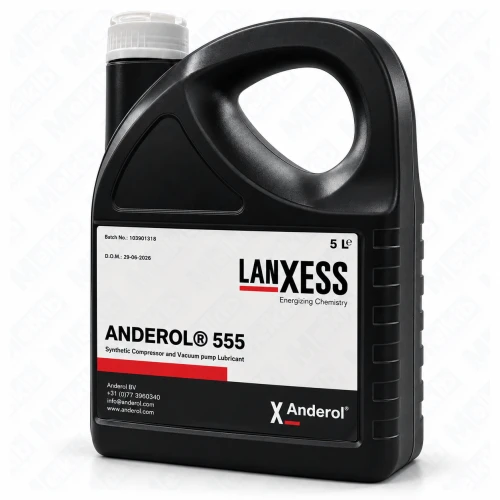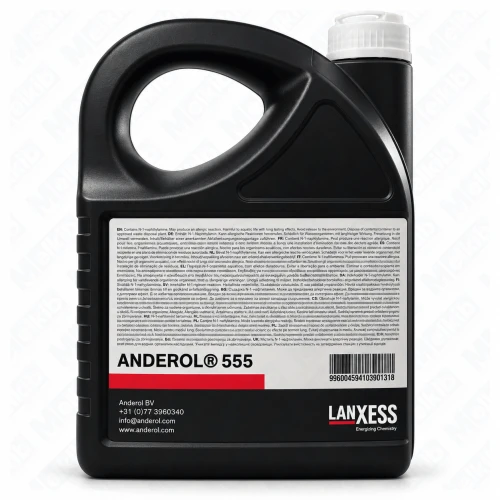



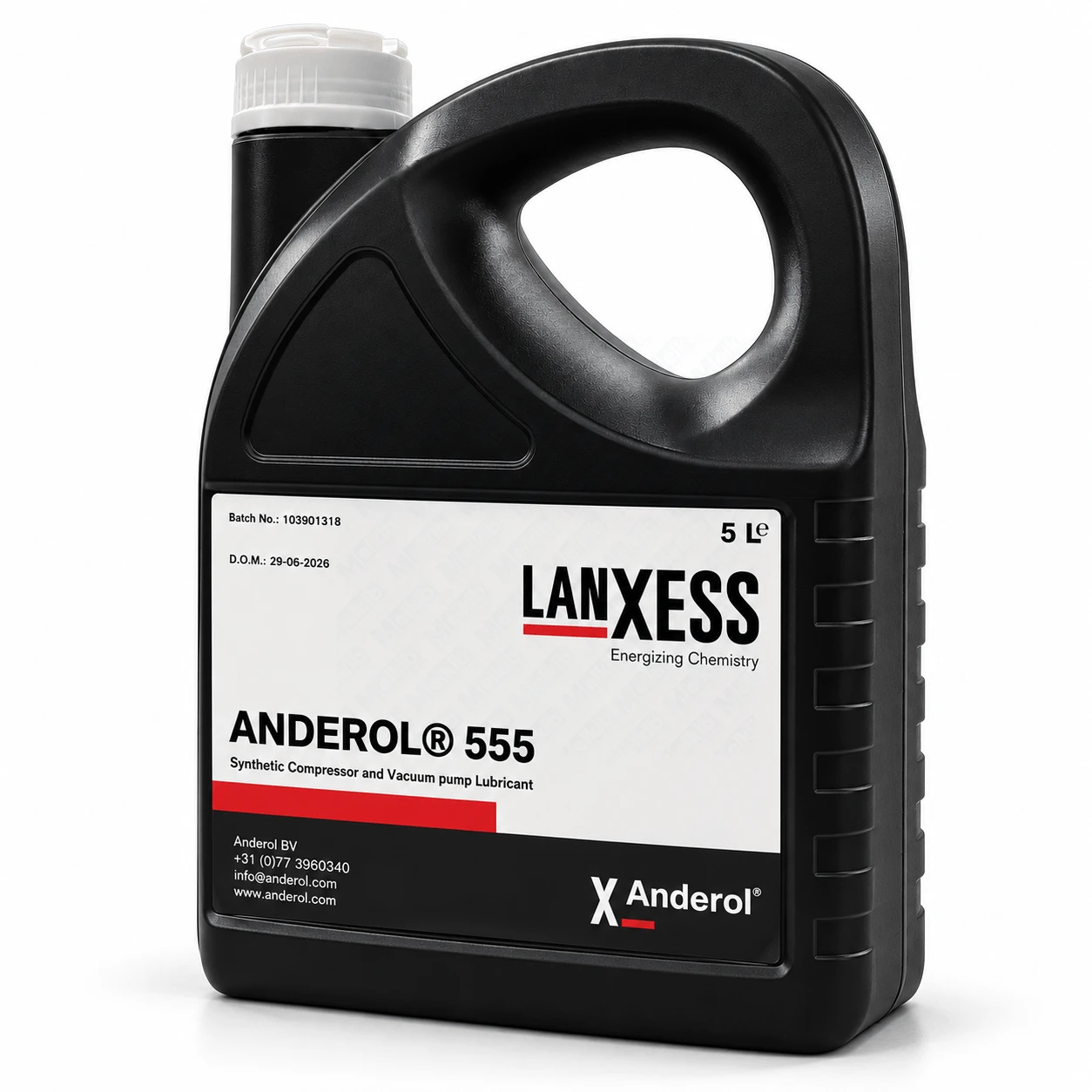
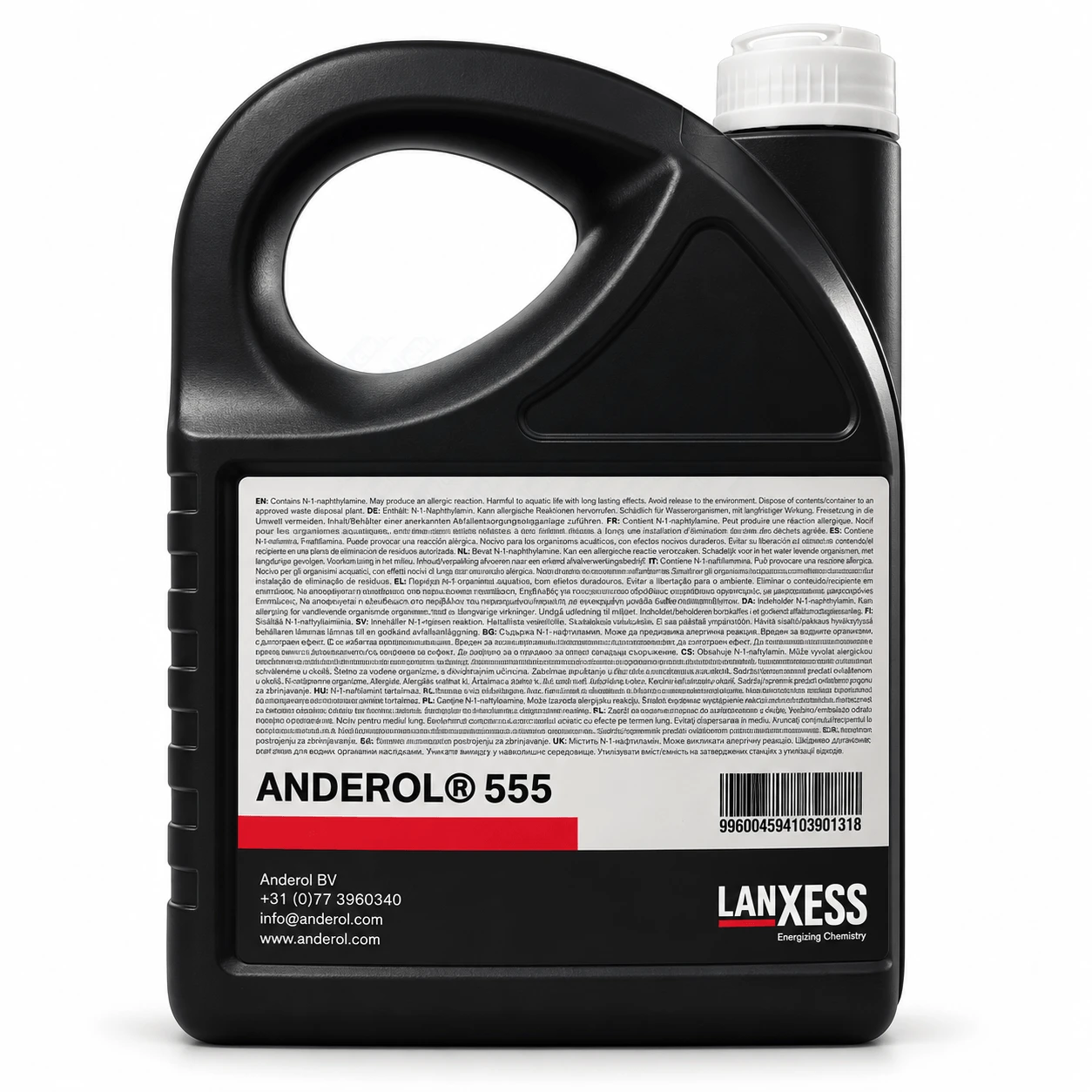
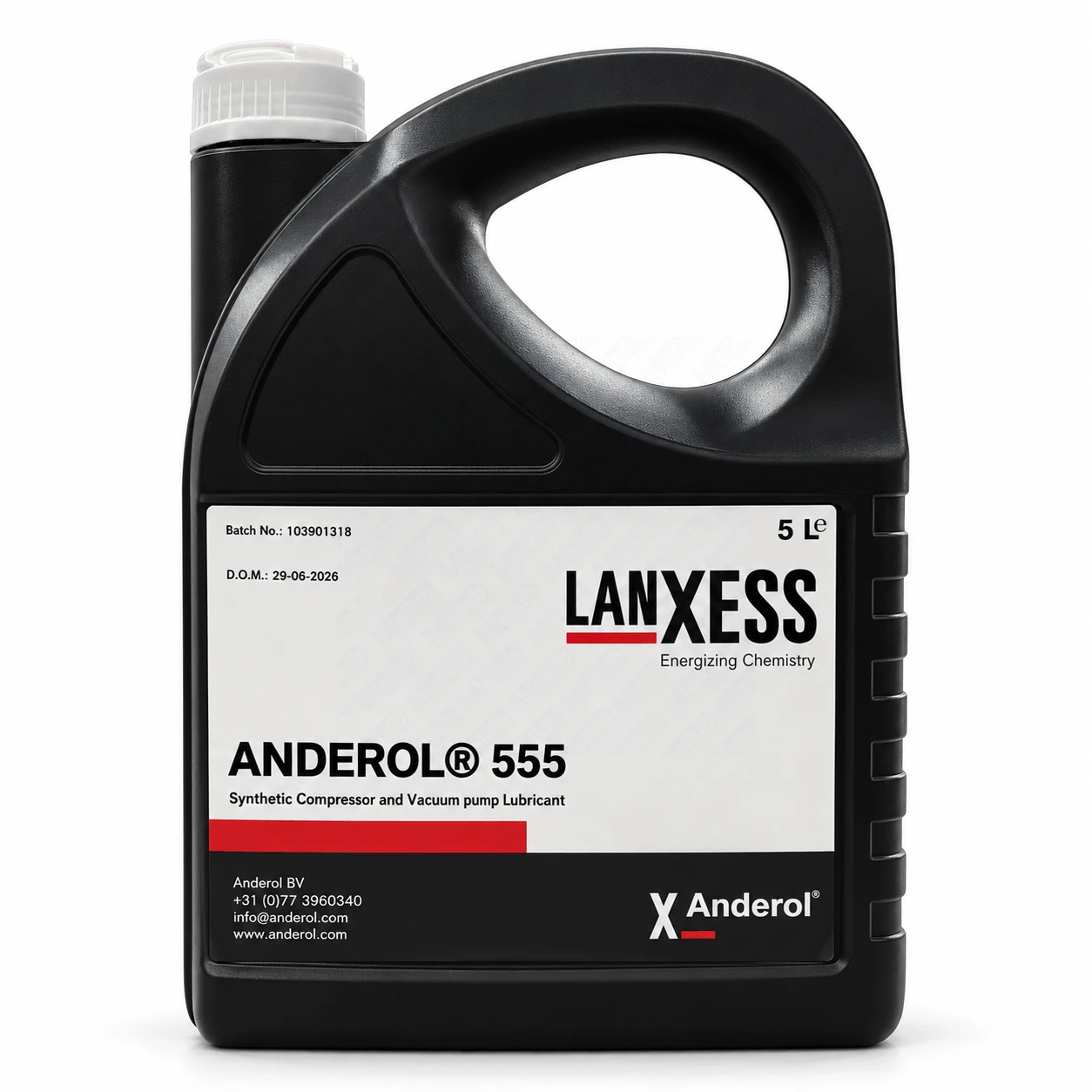
ANDEROL 555 5 L synthetic compressor oil ISO VG 100

Product code: MB-0327
Leave feedback on the product
Related products







Secure purchase guarantee



Opis produktu
ANDEROL 555 5 L – synthetic compressor and vacuum pump oil ISO VG 100
ANDEROL 555 is a specialist synthetic diester-based lubricant developed for air compressors, process gas compressors and vacuum pumps. With an ISO VG 100 viscosity grade, it is intended for industrial applications requiring effective lubrication and control of deposit formation in compression equipment.
In demanding compressor applications, unsuitable lubricants may contribute to deposit formation, valve problems and increased maintenance requirements. ANDEROL 555 is formulated to support clean operation, good lubricating performance and reduced lubricant consumption compared with conventional mineral oils.
Supplied in a 5-litre container, the product meets or exceeds DIN 51506 VDL and ISO 6743-3 L-DVC requirements according to the manufacturer. Its documentation also states BAM Recommended.
Applications of ANDEROL 555
ANDEROL 555 is designed for cylinder and crankcase lubrication in reciprocating compressors, vane compressors and vacuum pumps.
- Reciprocating compressors – cylinder and crankcase lubrication in industrial installations.
- Vane compressors – lubrication of working components in compatible equipment.
- Vacuum pumps – use in systems requiring a suitable synthetic diester lubricant.
- Process gas compressors – applications requiring verification of lubricant compatibility with the gas and compressor design.
Use with process gases
The manufacturer lists applications involving air, nitrogen, helium, hydrogen, methane, natural gas, propane, carbon monoxide, dry carbon dioxide, butadiene and ethylene.
Important: a gas being listed in the manufacturer's documentation does not constitute unconditional approval for every installation. Selection must take account of process pressure, temperature, gas properties and the equipment manufacturer's instructions.
Key benefits of ANDEROL 555
Synthetic diester technology
The synthetic diester base provides lubricating characteristics designed for demanding compressor applications. The formulation supports lubrication of working components and appropriate operating conditions.
Reduced deposit formation
The manufacturer highlights the formulation's ability to limit carbon deposits and lacquer formation, helping maintain cleaner compressor components and reduce deposit-related valve problems.
Water condensate separation
ANDEROL 555 is designed to separate water condensate rapidly. This characteristic is relevant in compressor systems where condensate forms during operation. Actual separation performance depends on operating conditions and system design.
Potential maintenance benefits
According to the manufacturer, the product can help reduce oil changes, lubricant consumption and maintenance requirements compared with conventional solutions. Actual benefits depend on operating conditions and equipment manufacturer recommendations.
Metal-free additive formulation
The manufacturer states that ANDEROL 555 does not contain metal-based additives that could interfere with catalytic processes. This is an important consideration when evaluating lubricants for specific industrial processes.
When should you choose ANDEROL 555?
ANDEROL 555 should be considered when the compressor or vacuum pump manufacturer permits an ISO VG 100 synthetic diester lubricant and when lubricating performance, condensate separation and deposit control are important selection criteria.
The product is intended for industrial maintenance departments, manufacturing facilities and operators of compressed air and process gas systems.
What should you check before use?
- Viscosity: verify that the equipment requires ISO VG 100.
- Base oil type: the diester formulation must be compatible with the system materials.
- Process gas: confirm suitability for the specific gas and operating conditions.
- Seals and coatings: not all elastomers and plastics are suitable for contact with diester oils.
- Lubricant changeover: check whether draining, flushing or other procedures are necessary.
- Drain interval: follow the equipment manufacturer's maintenance requirements and oil condition monitoring results.
Compatibility with oils and materials
Miscibility with mineral oils
ANDEROL 555 is fully miscible with mineral oils according to the manufacturer. However, dilution with mineral lubricants can significantly reduce the synthetic oil's performance. Miscibility does not establish unrestricted interchangeability in every system.
Recommended materials
The manufacturer's documentation lists Viton (FKM), high-nitrile Buna N, PTFE, epoxy coatings, oil-resistant alkyd coatings, Nylon, Delrin, Celcon and PBT as recommended materials.
Materials not recommended
Neoprene, SBR rubber, low-nitrile Buna N, acrylic coatings, lacquer, polystyrene, PVC and ABS are listed as not recommended.
Material suitability must always be assessed for the actual temperature, exposure conditions and equipment design.
Melkib Academy – diester oil versus mineral oil
Synthetic diester oils differ chemically from conventional mineral oils, which are based on refined petroleum fractions. These differences can influence lubrication behaviour, temperature characteristics and compatibility with seals, plastics and coatings.
Compressor oil selection should therefore consider not only ISO VG viscosity but also base oil chemistry, product specifications and the equipment manufacturer's instructions.
Technical data – ANDEROL 555 5 L
This table contains confirmed product identification and application information. Detailed typical analytical values should be checked against the current product data sheet.
| Parameter | Value |
|---|---|
| Brand | ANDEROL |
| Product designation | ANDEROL 555 |
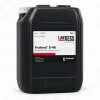
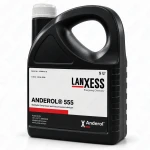
| Manufacturer indicated on packaging | LANXESS |
| Product type | Synthetic compressor and vacuum pump lubricant |
| Base oil | Synthetic diester |
| Viscosity grade | ISO VG 100 |
| Nominal operating temperature range | -15°C to +210°C |
| DIN 51506 | VDL – meets or exceeds requirements according to the manufacturer |
| ISO 6743-3 | L-DVC – meets or exceeds requirements according to the manufacturer |
| Manufacturer's designation | BAM Recommended |
| Main applications | Reciprocating and vane compressors and vacuum pumps |
| Miscibility with mineral oils | Yes; dilution may reduce performance |
| Container volume | 5 L |
Storage
Store ANDEROL 555 in its original, tightly closed container, protecting the lubricant from water, dust and other contamination. Follow the current safety data sheet for detailed storage and safe handling requirements.
FAQ – frequently asked questions about ANDEROL 555
Is ANDEROL 555 fully synthetic?
Yes. ANDEROL 555 is a synthetic diester-based compressor lubricant with ISO VG 100 viscosity.
What equipment is ANDEROL 555 suitable for?
It is designed for cylinder and crankcase lubrication in reciprocating compressors, vane compressors and vacuum pumps, subject to equipment compatibility.
Can ANDEROL 555 be used with natural gas and hydrogen compressors?
The manufacturer lists both natural gas and hydrogen among the relevant gases. Suitability for a specific installation must still be verified against process conditions and compressor manufacturer requirements.
Can ANDEROL 555 be mixed with mineral oil?
According to the manufacturer, the product is miscible with mineral oils, but dilution can reduce its performance. Check equipment and changeover recommendations before mixing.
Is ANDEROL 555 compatible with all seals?
No. The manufacturer recommends certain materials, including FKM and PTFE, and does not recommend others, such as neoprene, SBR, PVC and ABS.
How often should ANDEROL 555 be changed?
There is no universal drain interval. Follow the equipment manufacturer's maintenance schedule, actual operating conditions and oil condition monitoring results.
Does ANDEROL 555 meet DIN 51506 VDL?
Yes. The manufacturer states that it meets or exceeds DIN 51506 VDL and ISO 6743-3 L-DVC requirements. The documentation also states BAM Recommended.
Can ANDEROL 555 replace any ISO VG 100 oil?
No. Viscosity grade alone is insufficient to establish interchangeability. Check base oil chemistry, specifications, material compatibility and equipment requirements.
Product safety
Reviews
If you've added a review and it doesn't appear on the list, it may be pending moderation.
Leave feedback on the product